
Crowns and bridges
Quick answer
What is this treatment?
A crown is a cap placed over a damaged or weakened tooth. A bridge replaces a missing tooth by using neighbouring teeth or sometimes implants for support. The choice depends on the root, bite, space, gum health and expected chewing forces.
When it may be needed
- A tooth has a large filling, is cracked or is weakened.
- A tooth needs extra protection after root canal treatment.
- A tooth is missing and you want to restore chewing or appearance.
- An old crown or bridge causes symptoms or no longer fits well.
What to expect
- We examine the tooth, root, bite and surrounding gums.
- X-rays or scans may be needed to assess the foundation.
- We discuss material, colour, durability, alternatives and a cost estimate.
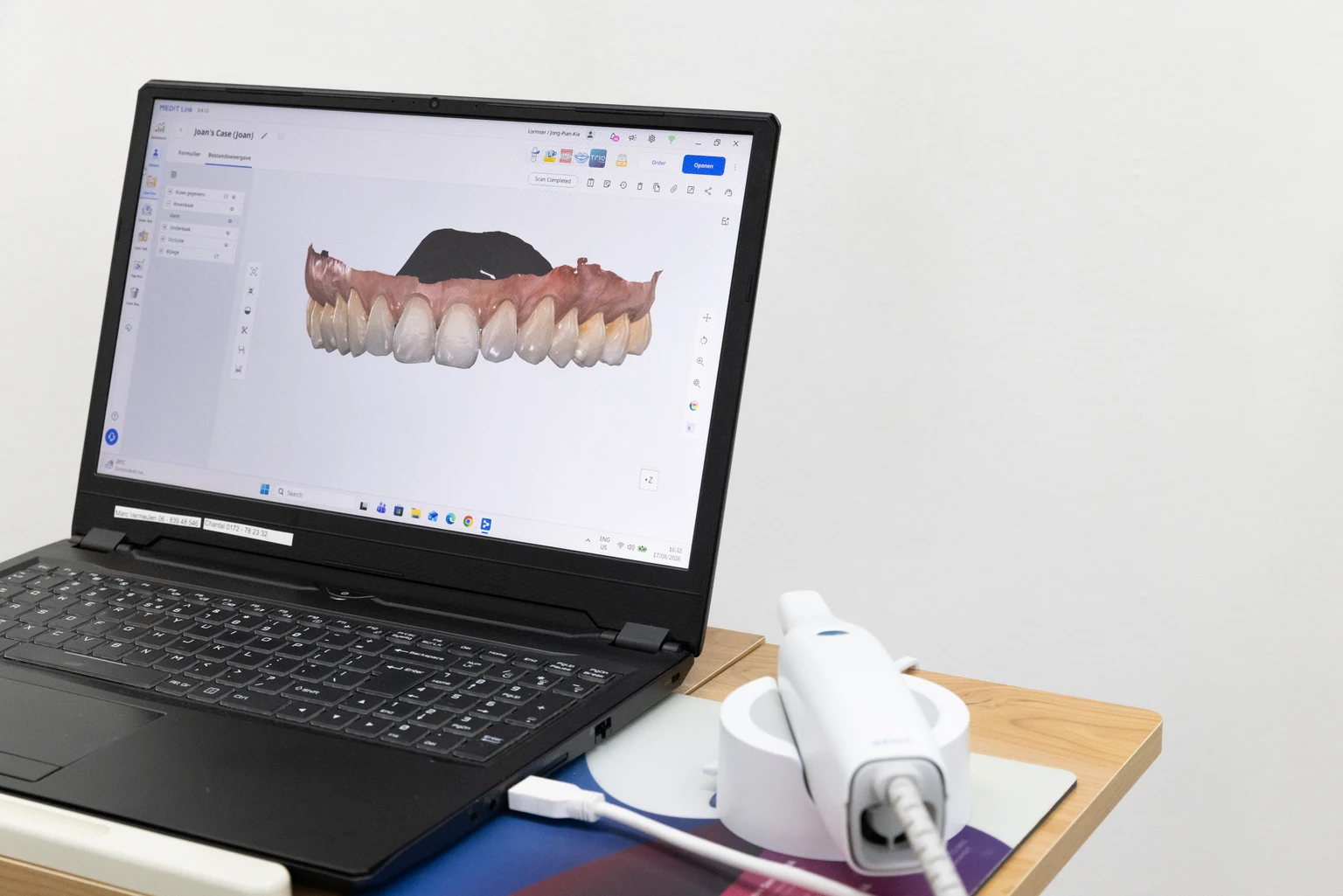
- Digital techniques can support an accurate fit.
Preparation and aftercare
- Have pain, infection or gum problems assessed first.
- Expect a temporary restoration during part of the process.
- Clean carefully around crown margins and under bridge sections.
- Return if it feels loose, hurts when biting or traps food.
Costs and insurance
For treatments where this is legally required or appropriate, you receive a clear cost estimate in advance. Current NZa rates are available on our pricing page.
The final route depends on the examination, materials, any referral and your insurance.
Frequently asked questions
When is a crown needed?
A crown may be needed when a tooth is too weak for a normal filling or needs protection after damage or root canal treatment.
When is a bridge an option?
A bridge can replace a missing tooth if neighbouring teeth are suitable. Sometimes an implant or denture is a better option.
Can a crown look natural?
The aim is a colour and shape that fit your smile. The result depends on material, space and surrounding teeth.
How do I clean a bridge?
Clean under the bridge and along the edges with suitable aids such as interdental brushes or special floss.